Videos From Big Think, hosted on © YouTube
 | The 12 values that define you | Chris Bailey The 12 values that define you | Chris Bailey Source: © Big Think, hosted on © YouTube |
 | The biggest red herring in our search for alien life | Sara Seager This interview is an episode from The Well, our publication about ideas that inspire a life well-lived, created with the John Templeton Foundation. Subscribe to The Well on YouTube ► https://bit.ly/thewell-youtube Watch all of Seager’s interviews ► https://www.youtube.com/playlist?list=PL_B7bI1QVmJDd11yscOAGnGrt6CGLiN_r Astrophysicist Sara Seager has redefined how we search for life, shifting the focus from definitive proof to the subtler, messier realm of possibility. By detecting biosignature gases — molecules that might indicate life in a planet’s atmosphere — her work explores what discovery looks like when certainty isn’t guaranteed. Volcanic gases and unknown chemistry can mimic life’s signals, meaning we may never get a perfect answer. But Seager sees beauty in that ambiguity. In adapting the famous Drake Equation, she offers a new framework for discovery, one that embraces the “maybes” as part of the scientific process. For the first time in human history, she says, we’re finally in a position to try. And that alone is extraordinary. Read the video transcript ► https://bigthink.com/the-well/the-biggest-obstacle-to-discovering-life-beyond-earth/?utm_source=youtube&utm_medium=video&utm_campaign=youtube_description_bigthink ---------------------------------------------------------------------------------- About Sara Seager: Professor Seager is Director for the MIT-led Venus Morning Star Missions to Venus and lead for Project Starshade. In the past she was Deputy Science Director for the MIT-led NASA mission TESS and PI for the on-orbit JPL/MIT CubeSat ASTERIA. ---------------------------------------------------------------------------------- About The Well Do we inhabit a multiverse? Do we have free will? What is love? Is evolution directional? There are no simple answers to life’s biggest questions, and that’s why they’re the questions occupying the world’s brightest minds. Together, let's learn from them. Subscribe to the weekly newsletter ► https://bit.ly/thewellemailsignup ---------------------------------------------------------------------------------- Join The Well on your favorite platforms: ► Facebook: https://bit.ly/thewellFB ► Instagram: https://bit.ly/thewellIG Source: © Big Think, hosted on © YouTube |
 | The real secret of the periodic table | David Epstein The real secret of the periodic table | David Epstein Source: © Big Think, hosted on © YouTube |
 | The blueprint for becoming an emotionally mature adult, in 68 minutes | Mark Manson: Full Interview Become a Big Think member to unlock expert classes, premium print issues, exclusive events and more: https://bigthink.com/membership/?utm_source=youtube&utm_medium=social&utm_campaign=membership&utm_content=bt-ytdesc-text-fi-manson-8Swxy4tUE3s Subscribe to Big Think on YouTube ► https://www.youtube.com/channel/UCvQECJukTDE2i6aCoMnS-Vg?sub_confirmation=1 Up next, How to grow deeply happy | Jonny Thomson ► https://www.youtube.com/watch?v=2WShJeNX7W8 Most people are trying to solve the wrong problem, optimizing for happiness when happiness isn't actually a goal, it's a byproduct. Mark Manson, author of The Subtle Art of Not Giving a F*ck, argues that the entire self-help industry has been selling ephemeral highs: affirmations, visualizations, the relentless pursuit of feeling good. The research doesn't support it, and more importantly, neither does lived experience. 0:00 Chapter 1: Becoming an emotionally healthy adult 5:15 Why you feel empty: The narcissism trap 9:13 How our worldview develops over time 18:16 Chapter 2: Developing a healthy sense of hope 20:30 Three complications of hope 29:56 Chapter 3: How to fix your life by changing your values 34:22 What does “not-giving-a-f*ck” look like? 37:06 Two techniques for figuring out your values 43:34 Manson’s law of avoidance 50:08 Chapter 4: Achieving the right kind of success 59:14 The real secret to success: Do something (even if it sucks) Read the video transcript ► https://bigthink.com/series/full-interview/true-happiness-maturity/?utm_source=youtube&utm_medium=video&utm_campaign=youtube_description © Freethink Media Inc., All Rights Reserved. ---------------------------------------------------------------------------------- Go Deeper with Big Think: ►Become a Big Think Youtube Member Get exclusive classes and early, ad-free access to new releases without leaving Youtube. https://www.youtube.com/@bigthink/membership/ ►Become a Big Think Web Member Get the entire Big Think Class library, premium print issues, live events, and more. https://bigthink.com/membership/ ►Subscribe to Big Think on Substack Get all of your favorite Big Think content delivered to your inbox. https://bigthinkmedia.substack.com/subscribe/ ►Listen to Big Think Interviews on Spotify Insights from the world's biggest thinkers, now as a podcast https://open.spotify.com/show/7KRYoRD1NdF2aoQcBMyPlb ---------------------------------------------------------------------------------- About Mark Manson: Mark Manson is a three-time #1 New York Times bestselling author of The Subtle Art of Not Giving a F*ck, as well as other titles, which have sold over 20 million copies, been translated into more than 65 languages, and reached number one in more than a dozen countries. In 2023, a feature film about Manson’s life and ideas was released worldwide by Universal Pictures. Source: © Big Think, hosted on © YouTube |
 | The mind-body connection you never knew you had We created this video in partnership with Unlikely Collaborators. The brain isn't separate from the body. It depends on it. Three scientists explain the biology behind one of science's most underexplored relationships. Subscribe to Big Think on YouTube ► https://www.youtube.com/channel/UCvQECJukTDE2i6aCoMnS-Vg?sub_confirmation=1 Your brain didn't evolve in isolation. It evolved to run the economy of your body, and every heartbeat, breath, and moment of thirst or anxiety is evidence of that system at work. Neuroscientist and author Aditi Nerurkar, neuroscientist Wendy Suzuki, and neurologist-philosopher Antonio Damasio break down the science of the mind-body connection: why it exists, how it works, and why understanding it can change the way you experience the world. Read more from this interview ► https://bigthink.com/videos/your-mind-body-connection-explained/?utm_source=youtube&utm_medium=video&utm_campaign=youtube_description Explore the Perception Box series hub ► https://bigthink.com/perception-box/?utm_source=youtube&utm_medium=video&utm_campaign=youtube_description ---------------------------------------------------------------------------------- Go Deeper with Big Think: ►Become a Big Think Member Get exclusive access to full interviews, early access to new releases, Big Think merch and more. https://members.bigthink.com/?utm_source=youtube&utm_medium=video&utm_campaign=youtube_description ►Get Big Think+ for Business Guide, inspire and accelerate leaders at all levels of your company with the biggest minds in business. https://bigthink.com/plus/great-leaders-think-big/?utm_source=youtube&utm_medium=video&utm_campaign=youtube_description Source: © Big Think, hosted on © YouTube |
 | The secret to beating procrastination | Chris Bailey The secret to beating procrastination | Chris Bailey Source: © Big Think, hosted on © YouTube |
 | How Dr. Seuss wrote a book with only 50 words | David Epstein How he wrote a book with only 50 words | David Epstein Source: © Big Think, hosted on © YouTube |
 | "Shitty flow" is real, and most people are drowning in it | Brad Stulberg: Full Interview Become a Big Think member to unlock expert classes, premium print issues, exclusive events and more: https://bigthink.com/membership/?utm_source=youtube&utm_medium=social&utm_campaign=membership&utm_content=bt-ytdesc-text-fi-stulberg-qbw38tHCUh4 Subscribe to Big Think on YouTube ► https://www.youtube.com/channel/UCvQECJukTDE2i6aCoMnS-Vg?sub_confirmation=1 Up next, What 85 years of research says is the real key to happiness | Robert Waldinger: Full Interview ► https://www.youtube.com/watch?v=_CxmzkYPvsg Most people chasing excellence are chasing the wrong thing entirely. Brad Stulberg argues that the 4am routines, optimization stacks, and recovery scores are just elaborate performance passed off as “excellence.” Stulberg breaks down the biology, philosophy, and psychology behind genuine excellence and how to reach it. 0:00 Chapter 1: What is excellence 2:44 Values, mastery, and mattering 5:00 The hidden biology driving our need to improve 8:55 The four phases of competence 11:13 What excellence is not 12:09 Chapter 2: The barriers to excellence 12:43 Barrier 1: Dysevolution 14:35 Barrier 2: Optimization culture 17:22 Barrier 3: “Shitty flow” 21:22 Barrier 4: Zombie burnout 27:05 Barrier 5: Happiness industrial complex 31:01 Barrier 6: Excellence as a standard 32:40 Chapter 3: Three key factors in the pursuit of excellence 33:51 How to set the right goals that actually work 39:20 Why consistency beats intensity 46:42 The long game of patience, plateaus, and breakthroughs Read the video transcript ► https://bigthink.com/series/full-interview/excellence-stulberg/?utm_source=youtube&utm_medium=video&utm_campaign=youtube_description © Freethink Media Inc., All Rights Reserved. ---------------------------------------------------------------------------------- Go Deeper with Big Think: ►Become a Big Think Youtube Member Get exclusive classes and early, ad-free access to new releases without leaving Youtube. https://www.youtube.com/@bigthink/membership/ ►Become a Big Think Web Member Get the entire Big Think Class library, premium print issues, live events, and more. https://bigthink.com/membership/ ►Subscribe to Big Think on Substack Get all of your favorite Big Think content delivered to your inbox. https://bigthinkmedia.substack.com/subscribe/ ►Listen to Big Think Interviews on Spotify Insights from the world's biggest thinkers, now as a podcast https://open.spotify.com/show/7KRYoRD1NdF2aoQcBMyPlb ---------------------------------------------------------------------------------- About Brad Stulberg: Brad Stulberg is the author of Master of Change, The Practice of Groundedness, and The Way of Excellence. He has written for the New York Times, the Wall Street Journal and The Atlantic, among many other publications. He is on faculty at the University of Michigan School of Public Health. Source: © Big Think, hosted on © YouTube |
 | The hidden cause of trauma | Nicole Lepera The hidden cause of trauma | Nicole Lepera Source: © Big Think, hosted on © YouTube |
 | The strange science of your ever-changing identity We created this video in partnership with Unlikely Collaborators. Bad news: your sense of self is made up. The good news is, you’re able to change it. Neuroscience and psychology explain. Subscribe to Big Think on YouTube ► https://www.youtube.com/channel/UCvQECJukTDE2i6aCoMnS-Vg?sub_confirmation=1 Perception feels stable. Your sense of self feels solid. Yet neuroscientist Heather Berlin, psychologist Ethan Kross and neuroscientist Nicole Vignola explain that both are created by the brain. Through prediction, memory and neural pruning, the mind builds a narrative that feels coherent and fixed, even though modern science suggests that it’s continually shaped by pre-existing beliefs and experience. Seeing the construction clearly is the first step toward altering it. Read more from this interview ► https://bigthink.com/videos/how-your-brain-builds-and-edits-your-identity/?utm_source=youtube&utm_medium=video&utm_campaign=youtube_description Explore the Perception Box series hub ► https://bigthink.com/perception-box/?utm_source=youtube&utm_medium=video&utm_campaign=youtube_description ---------------------------------------------------------------------------------- Go Deeper with Big Think: ►Become a Big Think Member Get exclusive access to full interviews, early access to new releases, Big Think merch and more. https://members.bigthink.com/?utm_source=youtube&utm_medium=video&utm_campaign=youtube_description ►Get Big Think+ for Business Guide, inspire and accelerate leaders at all levels of your company with the biggest minds in business. https://bigthink.com/plus/great-leaders-think-big/?utm_source=youtube&utm_medium=video&utm_campaign=youtube_description Source: © Big Think, hosted on © YouTube |
 | Stop trying to turn your suffering into a success story | Kate Bowler This interview is an episode from The Well, our publication about ideas that inspire a life well-lived, created with the John Templeton Foundation. Subscribe to The Well on YouTube ► https://bit.ly/thewell-youtube Watch Bowler’s next interview ► How self-help became America's religion https://www.youtube.com/watch?v=c3tZR1ZY1N8 American culture demands that pain be productive. Historian Kate Bowler explores how the obsession with finding meaning in suffering turns into what she calls “purpose monsters”: the need to make every loss, failure, or tragedy count for something. But not everything happens for a reason. And not all pain is a lesson. Bowler argues that grief deserves the dignity of honesty, not reframing. Instead of rearranging the past to find meaning, she suggests asking a different question: What’s left? And what might still be beautiful? Read the video transcript ►https://bigthink.com/the-well/is-pain-productive-or-pointless/?utm_source=youtube&utm_medium=video&utm_campaign=youtube_description_bigthink ---------------------------------------------------------------------------------- About Kate Bowler: Kate Bowler is a four-time New York Times bestselling author, award-winning podcast host, and Professor of Religious History at Duke University. ---------------------------------------------------------------------------------- About The Well Do we inhabit a multiverse? Do we have free will? What is love? Is evolution directional? There are no simple answers to life’s biggest questions, and that’s why they’re the questions occupying the world’s brightest minds. Together, let's learn from them. Subscribe to the weekly newsletter ► https://bit.ly/thewellemailsignup ---------------------------------------------------------------------------------- Join The Well on your favorite platforms: ► Facebook: https://bit.ly/thewellFB ► Instagram: https://bit.ly/thewellIG Source: © Big Think, hosted on © YouTube |
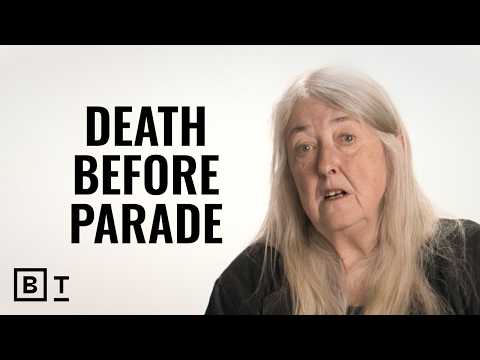 | This Roman ritual made conquered kings beg to die | Mary Beard Become a Big Think member to unlock expert classes, premium print issues, exclusive events and more: https://bigthink.com/membership/?utm_source=youtube&utm_medium=social&utm_campaign=yt_desc Subscribe to Big Think on YouTube ► https://www.youtube.com/channel/UCvQECJukTDE2i6aCoMnS-Vg?sub_confirmation=1 Up next, Hollywood lied to you about Ancient Rome. Here’s the truth | Mary Beard: Full Interview ► https://www.youtube.com/watch?v=v_yP8C7uo3Y Mary Beard uncovers the spectacle of the Ancient Roman parade, the Roman Triumph. Simultaneously a declaration of Roman supremacy and an admission that conquest might just be theft at scale, these Roman propaganda events were so terrifying that Cleopatra famously chose death over appearing in one. If you'd like to see Mary Beard discuss these ideas live, go to: https://www.instantclassicspod.com/events Read the video transcript ► https://bigthink.com/series/the-big-think-interview/roman-triumph-mary-beard/?utm_source=youtube&utm_medium=video&utm_campaign=youtube_description © Freethink Media Inc., All Rights Reserved. ---------------------------------------------------------------------------------- Go Deeper with Big Think: ►Become a Big Think Youtube Member Get exclusive classes and early, ad-free access to new releases without leaving Youtube. https://www.youtube.com/@bigthink/membership/ ►Become a Big Think Web Member Get the entire Big Think Class library, premium print issues, live events, and more. https://bigthink.com/membership/ ►Subscribe to Big Think on Substack Get all of your favorite Big Think content delivered to your inbox. https://bigthinkmedia.substack.com/subscribe/ ►Listen to Big Think Interviews on Spotify Insights from the world's biggest thinkers, now as a podcast https://open.spotify.com/show/7KRYoRD1NdF2aoQcBMyPlb ---------------------------------------------------------------------------------- About Mary Beard: Winifred Mary Beard, OBE, FBA, FSA is an English Classical scholar. She is Professor of Classics at the University of Cambridge, a fellow of Newnham College, and Royal Academy of Arts professor of ancient literature. She is also the classics editor of The Times Literary Supplement, and author of the blog, "A Don's Life," which appears in The Times as a regular column. Her frequent media appearances and sometimes controversial public statements have led to her being described as "Britain's best-known classicist." Source: © Big Think, hosted on © YouTube |
 | The brain on MDMA can go somewhere CBT has never been able to reach | Rachel Yehuda: Full Interview Become a Big Think member to unlock expert classes, premium print issues, exclusive events and more: https://bigthink.com/membership/?utm_source=youtube&utm_medium=social&utm_campaign=yt_desc Subscribe to Big Think on YouTube ► https://www.youtube.com/channel/UCvQECJukTDE2i6aCoMnS-Vg?sub_confirmation=1 Up next, The bizarre phenomena that medicine struggles to explain | David Linden: Full Interview ► https://www.youtube.com/watch?v=Hu1PyOP_NGA Trauma doesn't end when the danger does, and for decades, science couldn’t explain why. Rachel Yehuda, a leading PTSD researcher, has spent her career inside that question, uncovering how trauma leaves impressions on our genes, sometimes passing biological echoes on to the next generation. Now, she’s focused on a therapy that could actually break the chain. 0:00 Introduction: What trauma does to the brain 0:20 Chapter 1: Why trauma sticks 3:05 Stress vs. trauma: what’s the difference? 5:55 Why most people don’t develop PTSD 8:37 Chapter 2: How MDMA-assisted therapy can break the loop 9:19 How trauma warps self-perception 12:40 MDMA-assisted therapy explained 16:38 How societal narratives shape recovery (or worsen it) 23:04 The reality of psychedelic therapy (not a quick fix) 28:55 Chapter 3: Healing can echo across generations 30:48 Epigenetics explained 40:00 Can healing be passed on too? 43:43 PTSD beyond fear: guilt, shame, and trauma 47:01 What real healing looks like Read the video transcript ► https://bigthink.com/series/full-interview/mdma-therapy-yehuda/?utm_source=youtube&utm_medium=video&utm_campaign=youtube_description © Freethink Media Inc., All Rights Reserved. ---------------------------------------------------------------------------------- Go Deeper with Big Think: ►Become a Big Think Youtube Member Get exclusive classes and early, ad-free access to new releases without leaving Youtube. https://www.youtube.com/@bigthink/membership/ ►Become a Big Think Web Member Get the entire Big Think Class library, premium print issues, live events, and more. https://bigthink.com/membership/ ►Subscribe to Big Think on Substack Get all of your favorite Big Think content delivered to your inbox. https://bigthinkmedia.substack.com/subscribe/ ►Listen to Big Think Interviews on Spotify Insights from the world's biggest thinkers, now as a podcast https://open.spotify.com/show/7KRYoRD1NdF2aoQcBMyPlb ---------------------------------------------------------------------------------- About [Speaker Name]: Rachel Yehuda, PhD, Professor of Psychiatry and Neuroscience, is the Director of the Traumatic Stress Studies Division at Icahn School of Medicine, and the Mental Health Patient Care Center Director at the James J. Peters Veterans Affairs Medical Center. Dr. Yehuda has authored more than 300 published papers, chapters, and books in the field of traumatic stress and the neurobiology of PTSD. Her current interests include the study of novel treatments for PTSD, the examination of risk and resilience factors, the study of psychological and biological predictors of treatment response in PTSD, genetic, epigenetic, and molecular biological studies of PTSD and the intergenerational transmission of trauma and PTSD. Her team's research on cortisol and brain function has revolutionized our understanding and treatment of PTSD worldwide. Dr. Yehuda has received many awards in recognition of her work including the Curt Richter Prize in Psychoneuroendocrinology, and the Laufer award from the International Society for Traumatic Stress. She was also awarded the Max Planck Institute for Psychiatry (Munich, Germany) 2004 Guest Professorship in Psychiatry and Neuroscience, and the Marcus Tausk Professorship in Leiden University to honor her accomplishments in the endocrinology of PTSD. Dr. Yehuda received her PhD in Psychology and Neurochemistry and her MS in Biological Psychology from the University of Massachusetts at Amherst and completed her postdoctoral training in Biological Psychiatry in the Psychiatry Department at Yale Medical School. She has an active federally funded clinical and research program that welcomes students and clinicians. Source: © Big Think, hosted on © YouTube |
 | What happens to your brain when you’re dreaming We created this video in partnership with Unlikely Collaborators. Have you ever woken up after a dream and thought to yourself, “That made absolutely no sense”? According to modern neuroscience, there’s a reason why dreams feel so abstract and bizarre. Two sleep experts discuss. Subscribe to Big Think on YouTube ► https://www.youtube.com/channel/UCvQECJukTDE2i6aCoMnS-Vg?sub_confirmation=1 Every 90 minutes, our bodies go paralyzed while our brains become more active than during waking life. Sleep psychologist Dr. Shelby Harris and neuroscientist Dr. Patrick McNamara, Associate Professor of Neurology at Boston University, dig into one of the most fascinating mysteries in human biology: why we dream and what our brains are actually doing during REM sleep. They explore competing theories of what dreaming is for, McNamara makes a compelling case that REM sleep may have been a key driver of early human creativity, and both reflect on why reclaiming our reverence for the dream state could change the way we think and create. Read more from this interview ► https://bigthink.com/perception-box/the-physiology-of-dreams-explained/?utm_source=youtube&utm_medium=video&utm_campaign=youtube_description Explore the Perception Box series hub ► https://bigthink.com/perception-box/?utm_source=youtube&utm_medium=video&utm_campaign=youtube_description ---------------------------------------------------------------------------------- Go Deeper with Big Think: ►Become a Big Think Member Get exclusive access to full interviews, early access to new releases, Big Think merch and more. https://members.bigthink.com/?utm_source=youtube&utm_medium=video&utm_campaign=youtube_description ►Get Big Think+ for Business Guide, inspire and accelerate leaders at all levels of your company with the biggest minds in business. https://bigthink.com/plus/great-leaders-think-big/?utm_source=youtube&utm_medium=video&utm_campaign=youtube_description Source: © Big Think, hosted on © YouTube |
 | The search for aliens is shifting its criteria | Sara Seager This interview is an episode from The Well, our publication about ideas that inspire a life well-lived, created with the John Templeton Foundation. Subscribe to The Well on YouTube ► https://bit.ly/thewell-youtube Watch Seager’s next interview ► Why volcanoes might fool us into thinking we’ve found other intelligent life https://youtu.be/fPCuQcHusjQ?si=iIhM5MjK_zhofFf8 Astrophysicist Sara Seager has spent decades expanding how we search for life beyond Earth: not by asking what we would look like out there, but by imagining forms of intelligence that may be utterly unlike our own. Her work explores “technosignatures” — physical clues of advanced life, from satellite swarms to artificial light. As artificial intelligence accelerates here on Earth, Seager considers whether post-biological life might be what awaits us — and whether it already exists elsewhere in the cosmos. Our biggest challenge, she suggests, may be learning to see past the limits of our own imagination. Read the video transcript ► https://bigthink.com/the-well/the-biggest-obstacle-to-discovering-life-beyond-earth/?utm_source=youtube&utm_medium=video&utm_campaign=youtube_description_bigthink ---------------------------------------------------------------------------------- About Sara Seager: Professor Seager is Director for the MIT-led Venus Morning Star Missions to Venus and lead for Project Starshade. In the past she was Deputy Science Director for the MIT-led NASA mission TESS and PI for the on-orbit JPL/MIT CubeSat ASTERIA. ---------------------------------------------------------------------------------- About The Well Do we inhabit a multiverse? Do we have free will? What is love? Is evolution directional? There are no simple answers to life’s biggest questions, and that’s why they’re the questions occupying the world’s brightest minds. Together, let's learn from them. Subscribe to the weekly newsletter ► https://bit.ly/thewellemailsignup ---------------------------------------------------------------------------------- Join The Well on your favorite platforms: ► Facebook: https://bit.ly/thewellFB ► Instagram: https://bit.ly/thewellIG Source: © Big Think, hosted on © YouTube |